
When most people think about improving their health, they often focus on eating fewer calories, exercising more, or taking the latest supplement.
While these habits can certainly be valuable, they may overlook one of the most influential systems in the body: the gut.
Research over the past two decades has transformed our understanding of the digestive system. The gut is no longer viewed simply as the place where food is broken down. It is increasingly recognized as a central hub for digestion, immune function, metabolism, nutrient absorption, and even communication with the brain.
This means that caring for your gut may influence far more than digestive comfort alone.
Your Microbiome Is Working Around the Clock
Inside your digestive tract live trillions of microorganisms collectively known as the gut microbiome.
These bacteria, fungi, and other microbes help digest certain foods, produce beneficial compounds, support the immune system, assist with vitamin production, and help maintain the integrity of the intestinal lining.
When this ecosystem is balanced, many people experience healthy digestion, steady energy, regular bowel habits, and improved overall well-being.
When the microbiome becomes less diverse or disrupted, research suggests it may contribute to digestive symptoms, altered immune function, metabolic changes, and increased inflammation.
The goal is not to eliminate bacteria. It is to nourish the beneficial organisms that help your body function at its best.
Why Prebiotic Foods Matter
One of the most effective ways to support the microbiome is surprisingly simple.
Feed it.
Prebiotic foods contain specialized fibers that are not digested by you but instead become food for your beneficial gut bacteria. As these microbes ferment these fibers, they produce compounds called short-chain fatty acids, which help support the intestinal lining and contribute to a healthy gut environment.
Some excellent sources of prebiotic fiber include:
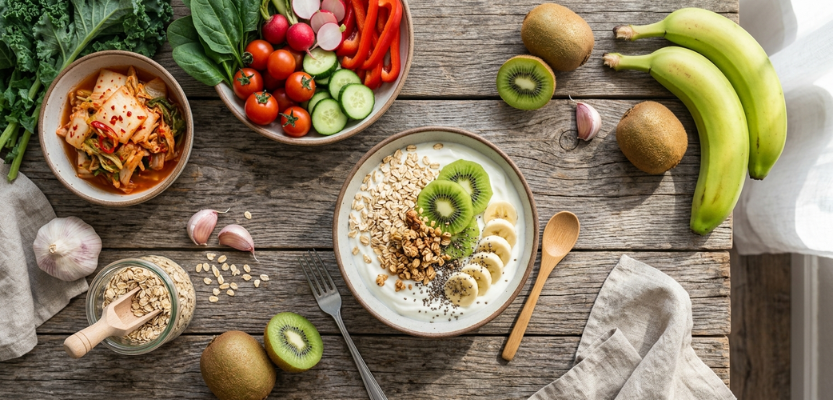
Bananas
Slightly green bananas are naturally rich in resistant starch, a type of prebiotic fiber that helps nourish beneficial bacteria while supporting digestive health and blood sugar balance.
Oats
Oats provide beta-glucan, a soluble fiber that supports digestive health while also helping beneficial bacteria thrive. Research also suggests beta-glucan may support heart health and healthy cholesterol levels.
Garlic
Garlic contains natural prebiotic compounds known as fructooligosaccharides (FOS) and inulin. These fibers selectively nourish beneficial microbes while also providing naturally occurring plant compounds that support overall health.
Rather than focusing on one “superfood,” consistently including a variety of fiber-rich foods creates a healthier environment for the microbiome over time.
Probiotic Foods Help Introduce Beneficial Microbes
While prebiotics feed your existing gut bacteria, probiotic foods introduce additional beneficial microorganisms into the digestive system.
Fermented foods have been consumed by cultures around the world for centuries, and modern research continues to explore their role in supporting microbial diversity.
One of the best-known examples is kimchi, a traditional fermented vegetable dish that naturally contains beneficial bacteria along with vitamins, antioxidants, and fiber.
Although probiotic foods are not a cure-all, they may help support digestive health as part of an overall nutrient-rich dietary pattern.
Kiwi Offers More Than Vitamin C
Kiwi is often recognized for its vitamin C content, but it also provides fiber, antioxidants, and plant compounds that support digestive health.
Research suggests that consuming kiwi may help promote regular bowel movements and support healthy digestion in some individuals, making it a valuable addition to an overall gut-friendly eating pattern.
It also contributes nutrients that support immune function and collagen production, illustrating how one whole food can benefit multiple systems within the body.
Gut Health Influences More Than Digestion
Many people first notice gut problems through symptoms such as bloating, constipation, diarrhea, or abdominal discomfort.
However, the influence of the gut extends much further.
Research suggests that the microbiome communicates with the brain through the gut-brain axis, influences immune activity, contributes to nutrient absorption, and plays a role in regulating inflammation throughout the body.
This may help explain why individuals who improve their digestive health sometimes also notice changes in energy levels, skin health, mood, sleep quality, and overall resilience.
The gut does not work in isolation. It functions as part of an interconnected network that supports nearly every aspect of health.
Consistency Matters More Than Perfection
Supporting the microbiome does not require an extreme diet.
Small, sustainable habits often make the greatest difference over time.
Including a variety of colorful vegetables.
Eating fiber-rich foods regularly.
Adding fermented foods when appropriate.
Staying hydrated.
Managing stress.
Sleeping well.
Remaining physically active.
These daily choices help create an environment where beneficial microbes can thrive.
Healthy gut bacteria flourish when they are nourished consistently, not occasionally.
A Functional Medicine Perspective
At The Dempster Clinic, we recognize that digestive health is about much more than relieving occasional symptoms.
A personalized functional medicine approach seeks to understand the many factors that may influence gut health, including nutrition, microbial balance, inflammation, stress, sleep, medications, food sensitivities, and lifestyle habits.
By identifying these underlying contributors, it may be possible to develop individualized strategies that support digestion, nutrient absorption, immune function, and overall well-being.
Final Thoughts
Every meal provides an opportunity to influence the health of your microbiome.
The foods you choose today help shape the environment inside your digestive system tomorrow.
The question isn’t simply whether you’re eating enough.
It’s whether you’re nourishing the trillions of microbes that help keep you healthy.
How The Dempster Clinic May Help
If you’ve been experiencing digestive discomfort, food sensitivities, bloating, low energy, or other persistent symptoms, a comprehensive functional medicine assessment may help uncover factors that are influencing your gut health. By taking a personalized, root-cause approach, we work to support the digestive system as one of the foundations of lifelong wellness.
Book your 15-minute complimentary discovery call today.
References
- Harvard T.H. Chan School of Public Health – The Nutrition Source: The Microbiome
- National Institute of Diabetes and Digestive and Kidney Diseases (NIDDK) – Your Digestive System and How It Works
- International Scientific Association for Probiotics and Prebiotics (ISAPP) – Consumer Information on Probiotics and Prebiotics
- National Center for Complementary and Integrative Health (NCCIH) – Probiotics: What You Need to Know
- World Health Organization – Healthy Diet Fact Sheet