When the Gut Became a Problem to Be Fixed
Few areas of health have attracted as much attention, and as much confusion, as the gut. Walk through the supplement aisle and you will find probiotics promising digestive harmony, enzymes promising better absorption, powders designed to feed beneficial bacteria, and increasingly sophisticated tests claiming to reveal precisely what is happening inside your microbiome. Online, the advice becomes even more contradictory. Avoid gluten. Eat more fiber. Stop eating lectins. Ferment everything. Eliminate dairy. Take probiotics every day. Follow a low-FODMAP diet. The strange result is that people have never known more about gut health while simultaneously becoming less certain about what a healthy gut actually requires.
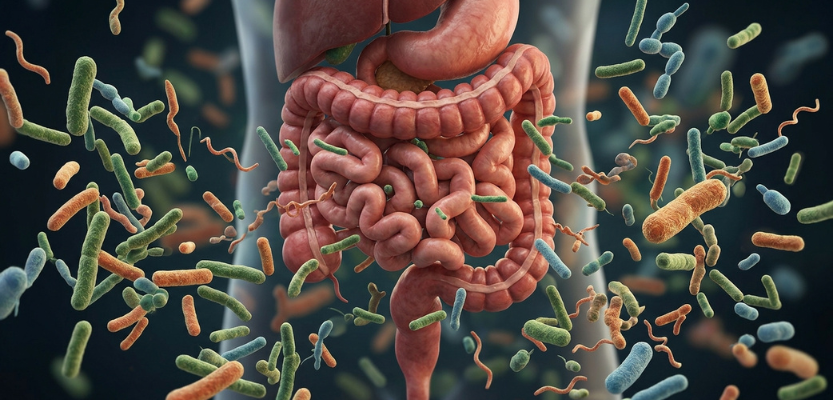
The problem is not that all of this advice is wrong. Much of it contains fragments of truth. The deeper problem is that the gut has been reduced to a collection of isolated parts when it is actually an ecosystem. Digestion depends upon coordinated activity among stomach acid, digestive enzymes, bile, intestinal motility, the nervous system, the immune system, the intestinal barrier, and trillions of microorganisms living throughout the gastrointestinal tract. Nerves, hormones, microbes, blood flow, and digestive organs work together to transform food into nutrients the body can actually use. (NIDDK) When we forget this interconnectedness, myths become attractive because they offer simple explanations for complicated biology. And sometimes those explanations keep people chasing symptoms rather than understanding why their digestive system became vulnerable in the first place.
Myth: If Your Digestion Feels Fine, Your Gut Must Be Healthy
We tend to judge the gastrointestinal system by what happens immediately after eating. No bloating, reflux, constipation, diarrhea, or abdominal pain? The gut must be doing well. Yet digestion is only one part of what happens there. The intestinal environment interacts continuously with immune function, nutrient metabolism, microbial signaling, and the nervous system. Gut microorganisms help metabolize components of food, produce biologically active compounds, compete with potentially harmful organisms, and interact extensively with immune tissues. (The Nutrition Source) This does not mean every headache, skin problem, mood change, or autoimmune condition originates in the gut, a popular claim that goes far beyond the evidence. It means the gastrointestinal system participates in a much larger biological network than digestion alone.
This distinction matters because people often wait for dramatic gastrointestinal symptoms before thinking seriously about gut health. Others make the opposite mistake and attribute nearly every unexplained symptom to “leaky gut” or an unhealthy microbiome. Both views oversimplify the biology. A better question is whether digestion, absorption, elimination, immune regulation, and microbial ecology appear to be functioning together appropriately. Gut health is not defined by the absence of bloating any more than cardiovascular health is defined by the absence of chest pain.
Myth: There Is One Perfect Microbiome
The discovery of the human microbiome created an irresistible idea: somewhere there must be a perfect collection of beneficial bacteria that healthy people possess and sick people lack. If we could identify that microbial blueprint, perhaps we could simply recreate it. The reality has proved far more interesting. Microbial communities vary considerably between individuals and are influenced by diet, genetics, environment, medications, geography, age, and countless exposures accumulated throughout life. (The Nutrition Source) A microbiome can also change over time, sometimes rapidly, in response to what we eat and the environment in which we live.
This is why interpreting microbiome testing requires considerable caution. Finding more of one organism or less of another does not automatically explain why someone feels unwell, and a stool report should not become a scavenger hunt in which every unfamiliar bacterium is treated as an enemy. Researchers are still working to understand which microbial patterns are causes of disease, which are consequences, and which simply represent normal human variation. The microbiome is better imagined as a rainforest than a spreadsheet. What matters is not merely which species are present but what they are doing, what resources are available to them, how stable the ecosystem is, and how that ecosystem interacts with its host.
Myth: A Probiotic Can Rebuild Your Gut
This naturally leads to one of the most commercially successful ideas in digestive health: if beneficial microbes matter, taking more beneficial microbes must improve the gut. Sometimes probiotics can be useful. Certain strains and formulations have evidence for specific circumstances, and probiotics continue to be actively investigated for gastrointestinal conditions. But “probiotic” describes an enormous category rather than a single treatment. Different strains can behave differently, evidence varies substantially by condition, and researchers still cannot say that one generic probiotic is universally beneficial for everyone. NCCIH notes that although probiotics have shown promise in several settings, important questions remain about which organisms help, who benefits, and what doses are appropriate. (NCCIH)
The larger lesson is that an ecosystem cannot necessarily be repaired simply by dropping new organisms into it. Imagine scattering seeds across depleted soil without asking why the previous plants disappeared. If the environment remains inhospitable, planting more seeds may accomplish very little. Microbes also require an appropriate habitat, and diet is one of the major forces shaping that habitat. Fibers and resistant carbohydrates reaching the colon can be fermented by microbes into compounds such as short-chain fatty acids, which participate in metabolic and immune signaling. (The Nutrition Source) Sometimes the more important question is not which bacteria you should swallow, but what kind of intestinal environment you are creating for the organisms already living there.
Myth: Healthy Foods Are Healthy for Everyone
This is where gut-health advice becomes especially confusing. Fiber-rich vegetables, legumes, whole grains, fermented foods, and other minimally processed foods can support microbial diversity and digestive health. Yet someone with severe bloating may feel dramatically worse after eating foods that are routinely described as “gut healthy.” The conclusion is often that those foods are harmful. In reality, the response may reveal something about the individual’s digestive physiology rather than the inherent quality of the food.
Consider FODMAPs, fermentable carbohydrates that can aggravate symptoms in some people with irritable bowel syndrome. A low-FODMAP diet can be clinically useful, but it is generally used as a structured intervention followed by gradual reintroduction rather than an assumption that every fermentable food is permanently dangerous. NIDDK specifically describes reintroducing FODMAP-containing foods after the initial restriction to determine individual tolerance. (NIDDK) This principle extends beyond FODMAPs. When the list of tolerated foods grows progressively smaller, the objective should not always be to find the next food to eliminate. It may be worth asking why the digestive system has become increasingly reactive.
Myth: Gut Problems Are Only About Food
Perhaps the most persistent misconception is that digestive problems must have dietary solutions. Food obviously matters, but the intestine does not operate independently of the nervous system. Anyone who has experienced nausea before an important presentation or suddenly needed a bathroom during a stressful event has witnessed this connection firsthand. The brain and digestive tract communicate continuously, which is one reason therapies such as cognitive behavioral therapy, relaxation training, and gut-directed hypnotherapy can improve symptoms in some people with IBS. (NIDDK) Stress does not mean digestive symptoms are imaginary. It demonstrates precisely the opposite: psychological and physiological experiences are translated into measurable biological signals.
Sleep, movement, medications, infection history, eating patterns, hormonal changes, and chronic stress can all become part of the broader clinical story. This is why someone can eat an apparently impeccable diet and still struggle with digestion. The gut is listening to far more than food. Focusing exclusively on ingredients while ignoring the conditions in which digestion occurs is like repeatedly changing the fuel in a car without examining the engine.
The Myth Beneath All the Others
Beneath nearly every gut-health myth lies the same assumption: there must be one thing causing the problem. One bad food. One missing bacterium. One infection. One supplement deficiency. One toxin. Occasionally there is a clear culprit, and persistent or concerning digestive symptoms deserve appropriate medical evaluation because conditions such as celiac disease, inflammatory bowel disease, infection, and other gastrointestinal disorders should not be reduced to vague ideas about “gut imbalance.” But chronic functional digestive complaints can also emerge from interactions among motility, microbial activity, diet, immune signaling, visceral sensitivity, and the gut-brain axis. Even IBS is treated through multiple approaches because different strategies work for different people. (NIDDK)
That is why restoring gut health often begins with abandoning the search for a universal gut-health formula. The goal is not to create a “perfect” microbiome or live indefinitely on an increasingly restrictive diet. It is to build resilience: a digestive system capable of processing a varied diet, maintaining appropriate microbial relationships, absorbing nutrients, eliminating waste, communicating effectively with the nervous and immune systems, and recovering when disrupted. Sometimes that requires dietary changes. Sometimes it requires addressing motility, stress physiology, medication effects, or an underlying medical condition. Often several pieces need to be considered together.
The gut is not a puzzle waiting for one missing piece. It is a living ecosystem constantly adapting to the world around it. Once we stop trying to control that ecosystem through simplistic rules, we can begin asking more useful questions about why it changed, what continues to disturb it, and what conditions might allow resilience to return. That shift from chasing digestive symptoms to understanding digestive physiology is where a root-cause approach becomes most valuable.
If persistent bloating, irregular bowel movements, food reactions, or other digestive symptoms continue despite repeated diets and supplements, a more comprehensive assessment may help clarify what is driving the pattern. Book your 15-minute complimentary discovery call today to explore a personalized functional medicine approach to digestive health.
References
- National Institute of Diabetes and Digestive and Kidney Diseases: Your Digestive System & How It Works
- National Center for Complementary and Integrative Health: Probiotics, Usefulness and Safety
- Harvard T.H. Chan School of Public Health: The Microbiome
- National Institute of Diabetes and Digestive and Kidney Diseases: Eating, Diet & Nutrition for IBS